M-10 Compact Inspection Multirotor
A 10 kg payload class compact multirotor with sub-metre hover accuracy, for close-range, high-detail inspection of substation rooms, short tower spans and building facades.
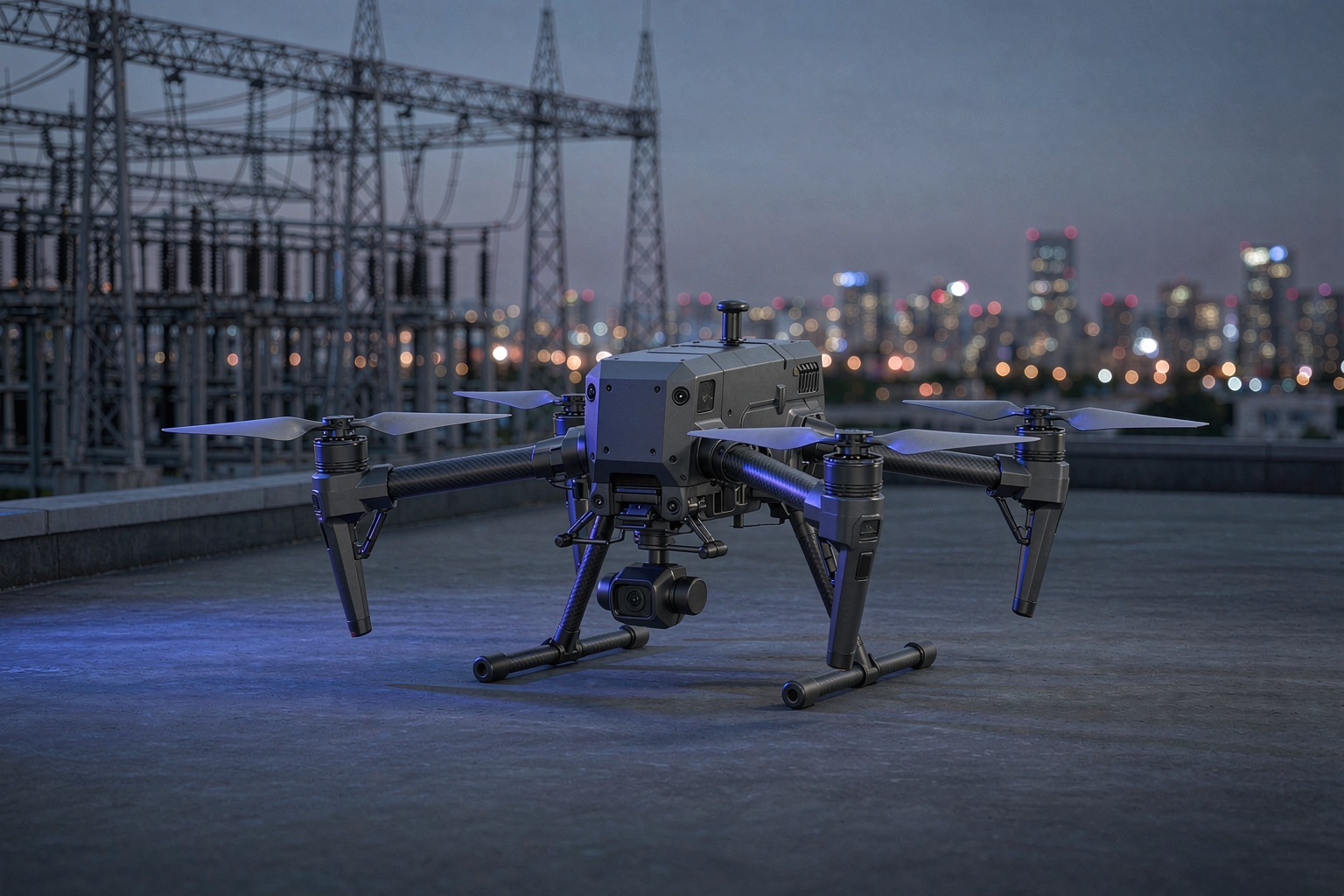
Positioning
M-10 is built for work that means looking closely. In this class the deciding factors are hover stability and optics rather than area coverage — a substation room, a short tower span or a single leak on a facade all need the aircraft to hold position long enough to capture an image someone can actually judge from.
Payload capacity is in the 10 kg class, enough for a visible-light gimbal with margin. The airframe is compact, so transit and site preparation are simple, which suits repeated short missions in urban and industrial settings.
Key specifications
| Parameter | Value |
|---|---|
| Payload capacity | 10 kg class |
| Hover accuracy | Sub-metre (±0.5–1 m) |
| Typical payload | P-EO visible-light gimbal |
| Typical work | Substation rooms, short tower spans, building facades |
| Data output | Imagery and capture metadata, filed against asset identifiers |
Hover accuracy varies with payload, wind and positioning conditions. If you need a figure as an acceptance criterion, we will issue the test conditions for your operating case.
Payload configuration
The standard M-10 configuration is a P-EO visible-light gimbal for high-definition imaging and zoom observation. For night work or temperature-difference observation, the right platform is M-15 (P-EO plus P-TIR thermal) or M-30.
The limiting factor is total payload mass and power budget, not the number of mounting points. We confirm what can be carried together for your configuration.
Payload and energy
Inspection work spends most of its time on station rather than in transit. The useful planning figure is therefore how long the aircraft can hold position while the payload is working.
Time on station depends on payload mass, wind at altitude, and the split between hovering and transit. Gimbal and lighting payloads draw continuously, so time on station with them fitted is shorter than a pure observation flight on the same airframe.
What to confirm before ordering
- The payload required and whether items operate simultaneously
- Required time on station at each target
- Whether night work or temperature-difference observation is needed — this decides whether M-15 is the right platform
- Operating environment — temperature, wind, precipitation
- How imagery is filed, and the asset numbering scheme it must match
Frequently asked questions
Can the M-10 be configured for a specific mission?
Yes. The M-10 is configured to the mission rather than sold as a fixed package: payload combination, data link, power and mechanical interfaces are settled before the order, and acceptance criteria are agreed before work starts.
Under what conditions were the specifications measured?
The table gives typical-condition values. Actual figures depend on payload, wind and dispatch pattern; per-item conditions are confirmed with the project.
How are price and lead time given?
There is no published price list. Pricing follows configuration and quantity; production is scheduled against orders, and lead time is confirmed with the order.